The IV Drip is a Scam in a White Coat
IV drip therapy has become one of the fastest-growing trends in the wellness industry. But beneath the sleek branding and medical aesthetics, a critical question remains: does it actually work?

By Eric Verdin
CEO, Buck Institute for Research on Aging
Originally written by Professor Eric Verdin
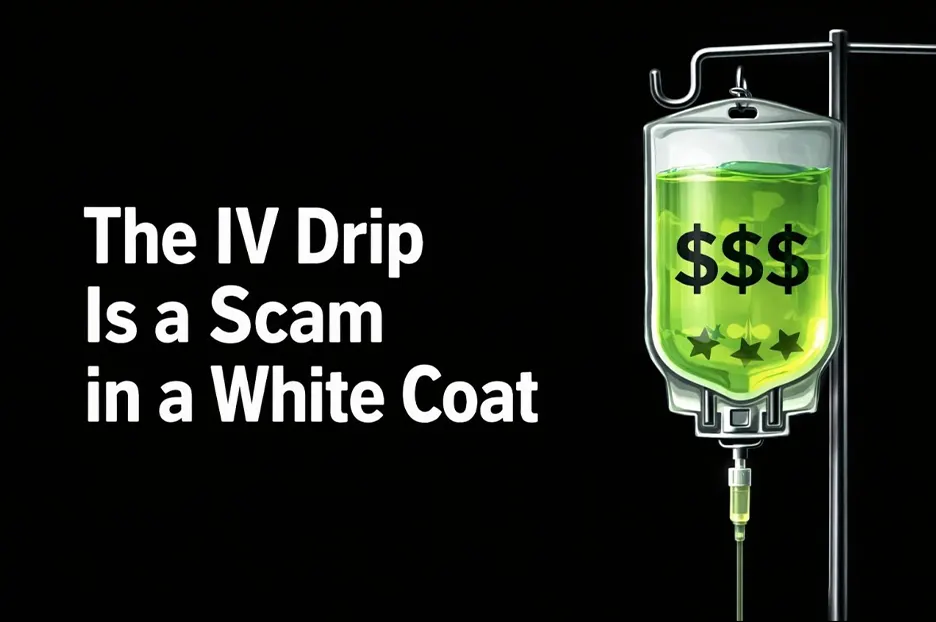
The modern intravenous infusion clinic is a triumph of branding over biology—a polished, expensive answer to a problem that, for most people, does not exist. Draped in the aesthetics of clinical care—white coats, IV poles, menus of micronutrients—it borrows the credibility of medicine while largely bypassing its evidentiary standards.
The central promise of IV wellness therapy is simple and seductive:
“Bypass the gut, deliver nutrients directly into the bloodstream, and achieve superior health outcomes. evidentiary standards.”
At first glance, this seems logical. But under even modest scrutiny, the reasoning begins to fall apart.
Human physiology evolved to regulate nutrient absorption through the intestine with exquisite control. Oral intake is not a flaw; it is the system. When nutrients are delivered intravenously:
- The body loses its natural regulatory control
- Blood levels spike rapidly
- Excess nutrients are quickly buffered, redistributed, or excreted
What the Evidence Shows
Outside of clear medical indications—severe deficiencies, malabsorption syndromes, chemotherapy support, acute dehydration—the evidence that IV “wellness” infusions improve health, cognition, immunity, or aging is thin to nonexistent.
The Marketing Illusion
The marketing is expansive: “immune boosts,” “detox,” “anti-aging,” “mitochondrial support.” These phrases function as placeholders for mechanisms rarely demonstrated in humans. Beneath the evidentiary poverty lies something more insidious: the idea that health can be purchased as a series of acute biochemical interventions rather than built through durable behaviors—sleep, exercise, diet, social connection. The result is metabolic theater. It is easier to sell a drip than to sell effort.
The Hidden Risks
The risk profile is often minimized, but IV therapy is not without complications.
Potential risks include:
- Infection from IV access
- Phlebitis (vein inflammation)
- Fluid overload
- Electrolyte imbalances
High-dose vitamins can also cause adverse effects:
- Vitamin C may increase oxalate load
- Vitamin B6 can lead to neuropathy
- Excess magnesium may affect cardiac function
These are predictable consequences of bypassing normal homeostatic gates, yet the framing remains one of “hydration” and “repletion.”
Economically, the model is elegant. Inputs are inexpensive; margins are high. The product is not the fluid in the bag but the experience—personalization, the feeling of being “proactive,” the borrowed legitimacy of a clinical setting. They monetize anxiety and aspiration, converting both into recurring revenue.
By normalizing medicalized consumption without medical necessity, these clinics blur the boundary between evidence-based care and elective enhancement. The opportunity cost is not just financial; it is cognitive. Time and belief invested in low-yield therapies are time and belief not invested in high-yield ones.
In the end, the proliferation of IV infusion clinics reflects a demand for immediacy in a domain governed by accumulation, for certainty in a field defined by variability.
This article was originally written by Professor Eric Verdin. All rights and credit belong to the original author.